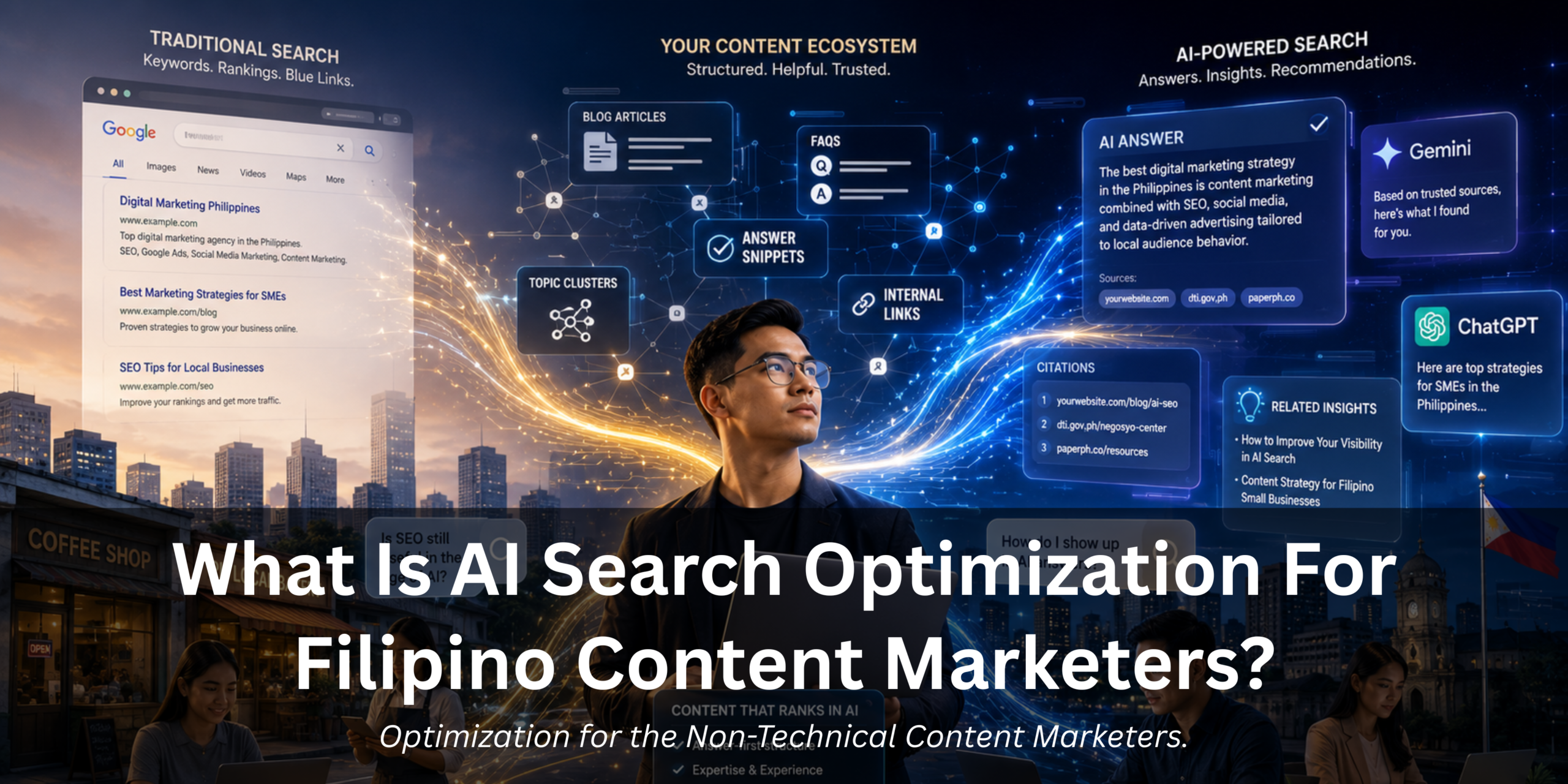
What Is AI Search Optimization For Filipino Content Marketers?
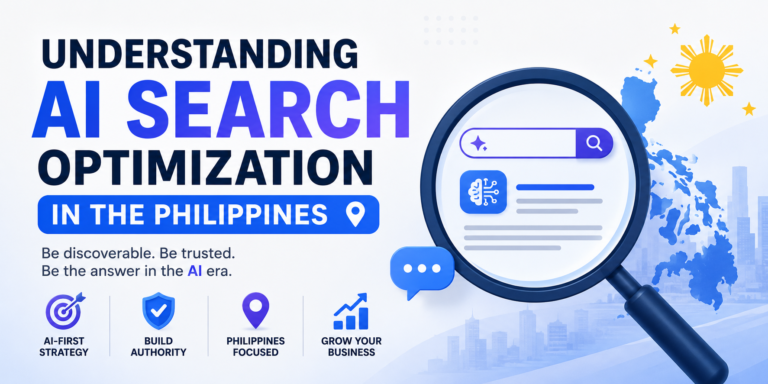
In my extensive practice of SEO, and learning more and more about AEO, AI search optimization is about helping AI search engines choose your content as a reliable answer source, not just ranking in traditional Google results. For Filipino SMEs, that means writing clear, helpful articles that answer real business questions and making it easy for both Google and AI systems to understand what each page is about.
For non-technical content marketers, your AI search optimization approach needs to be focused on your content. The content-first discipline needs to focus on how you frame topics, structure answers, and build internal links, so your expertise is visible wherever your audience searches.
Why AI Search Optimization Matters In The Philippine Market
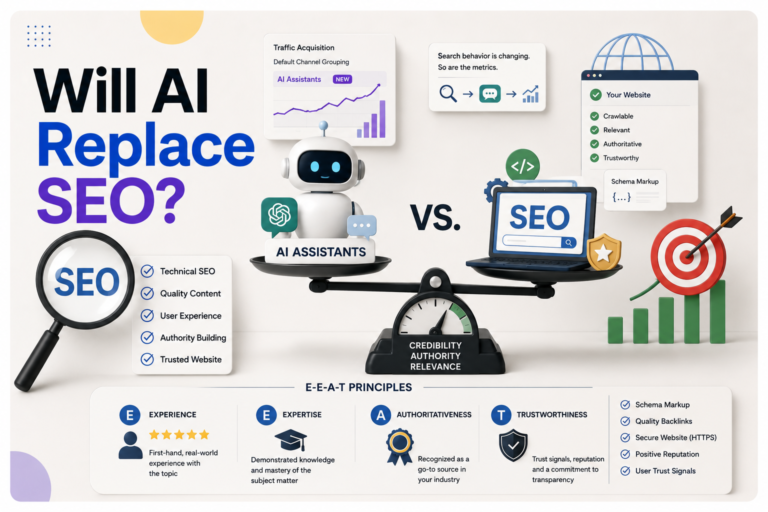
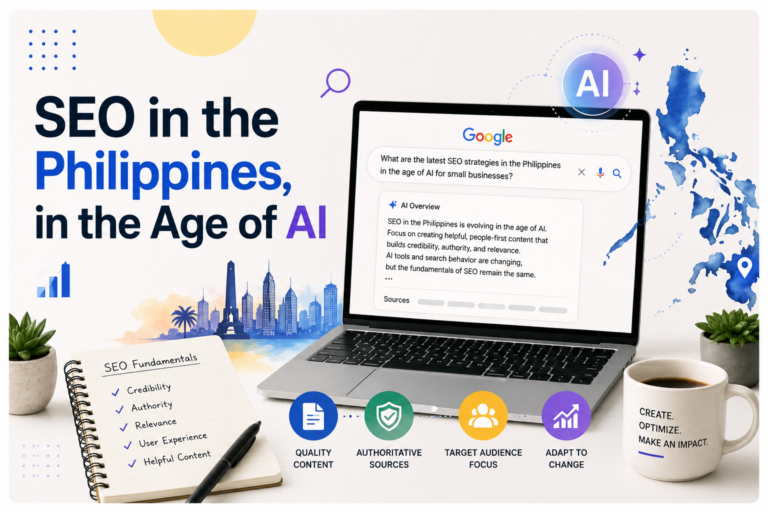
Choosing the right AI platform to optimize for, much less to use and start with, can be confusing especially for non-technical content marketers in the Philippines. But one thing’s for sure, whether you’re a technical marketer or not, the state of how people search has changed. Filipino business owners now ask questions directly in tools like Google, ChatGPT, and Perplexity before they ever talk to an agency or vendor. If your brand does not show up in those AI-generated answers, you lose visibility long before the “click” happens.
For local SMEs and non-technical content marketers, strong AI search optimization helps you:
- Be cited in AI answers about SEO, AI marketing, and digital strategy in the Philippines;
- Build trust by appearing consistently as a helpful, expert source across multiple platforms; and
- Turn more of those AI-assisted research journeys into inquiries, consultations, and leads.
Step 1: Start With One Clear Question Your Audience Is Already Asking
Most Filipino SMEs do not search for your topic in a vacuum. In doing AI search optimization, anticipate that they type real questions into Google and AI tools. They ask things like “How do I show up in AI answers?” or “Is SEO still useful in the age of AI?” and expect an immediate, practical response that matches their situation.
One of the strongest tools you have in your AI search optimization toolkit is your answer-first content structure, and this is where it becomes powerful. In your opening 40–60 words, give a direct, business-friendly answer to one primary question, then expand with context and examples in the rest of the article. Structuring content this way makes it easier for AI engines and Google to understand what the page is about and why it should be surfaced when someone in the Philippines searches for that exact problem.
Step 2: Use Plain Language Headings That Sound Like Real Filipino Marketers
AI search engines now pull summaries from your headings and the sentences that follow them, so the way you name sections matters a lot. Instead of abstract labels like “Future-Proofing Your Brand,” use concrete, Philippine-context headings like “Adopting to the Industry’s Trends this 2026 in the Philippines” or headlines that establish a lot of context, but are really specific that anticipates how people will want to search for their brand.
These style of headings mimic the way Filipinos actually phrase queries, which makes your content easier for AI systems to map to real questions. When you write your own blogs, consider sectioning your articles in such a way that these “chunked” parts also answer a part of the bigger problem that your main article focus is trying to answer.
Step 3: Turn Your Topic into a Content Cluster, Not Just a Single Post
If you want to own your topic in the local context or setting, one strong article will not be enough. You need a cluster of related content that all points to the same theme. If you are writing your first blog about a topic you want to be cited for, strategize also for the angles for the next blogs in your series. This new blog is but your entry point, which will connect to deeper resources that explore the concept from different angles.
This cluster-based approach aligns with Google’s guidance to publish helpful, reliable content across related topics, and it gives AI systems a dense, interconnected set of signals that your brand is a primary authority on your topic.
Operationalizing AI Search Optimization for Content Marketers
AI search optimization is not a technical privilege reserved for engineers. It is a content discipline that Philippine marketers can practice every time they publish an article, update a service page, or write a FAQ. By starting with a clear question, answering it directly in your opening, using plain-language headings, and tying your posts into a focused content cluster, you make it easier for both Google and AI tools to trust, summarize, and recommend your expertise.
The brands that will win in this new search environment are not the ones publishing the most content, but the ones consistently answering the right questions with clarity, depth, and a clear Philippine context.
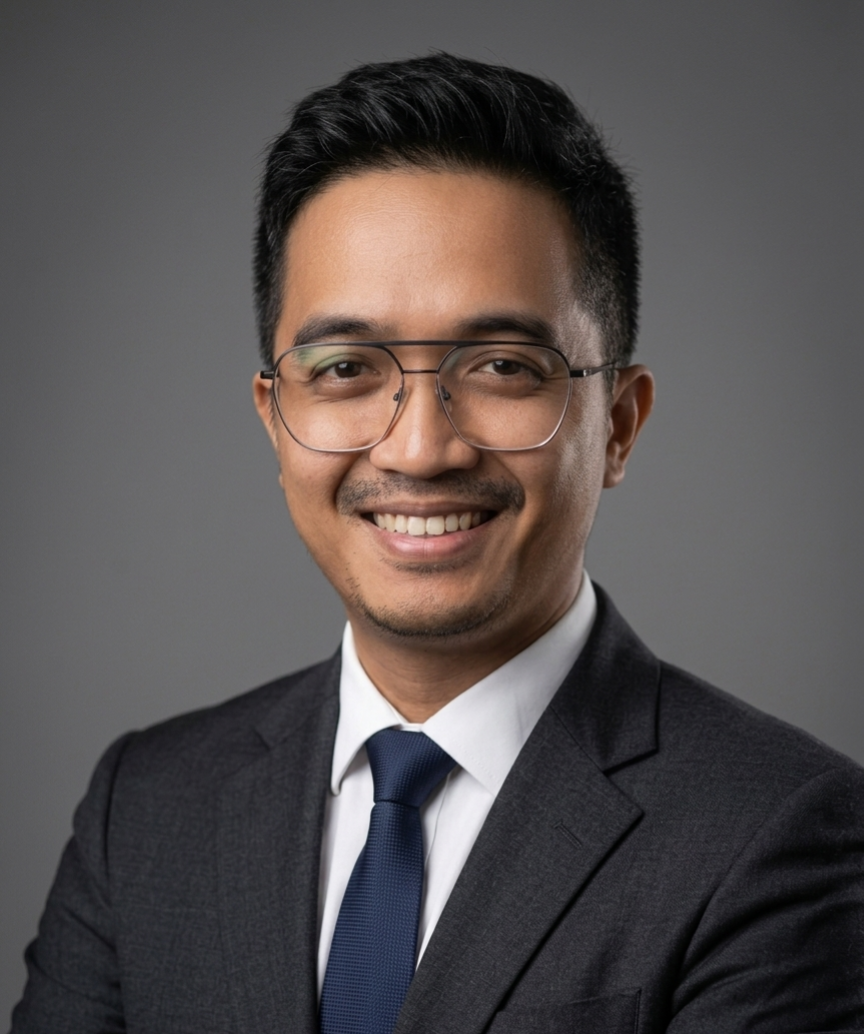
James Michael Chiong is a digital marketing strategist and consultant who helps small and medium businesses in the Philippines grow through SEO, Meta Ads, Google Ads, and data-driven marketing strategy. With 10+ years of experience across agencies, in-house, and consulting roles, James has led digital campaigns for brands in real estate, publishing, education, BPO, retail, and professional services.
He previously served as Digital Director and Director for Digital Strategies at TeamAsia — an award-winning Integrated Marketing Experience agency — where he spearheaded the formation of TeamAsia DigiCreatives, a merged Digital, Creatives, and Technology unit delivering AI-assisted SEO, voice-enabled search, and end-to-end e-commerce marketing solutions.
James has been featured as a social media marketing expert on ABS-CBN News (My Puhunan: Kaya Mo!, March 2025), where he shared practical digital strategies for Filipino MSMEs. He has also been quoted in adobo Magazine in relation to digital transformation in the marketing industry, and has appeared as a guest on TeamAsia’s B2B: Breakfast to Business podcast on Spotify — covering AI in marketing and digital strategy during the pandemic era.
He co-authored multiple thought leadership pieces published on TeamAsia’s platform, including articles on social media authenticity, integrated digital marketing, and the intersection of creativity and technology. He was also recognized as part of TeamAsia’s new management leadership on the agency’s 32nd anniversary in 2024.
James holds certifications in Google Analytics and HubSpot Inbound Marketing, and has served as a Marketing Professor at Lyceum of the Philippines – Cavite. He is based in Bacoor, Cavite, Philippines, and writes about SEO, AI in marketing, and digital strategy on JC Digital.
As Seen In: ABS-CBN News | adobo Magazine | TeamAsia B2B Podcast on AI (Spotify)