How Filipino SMEs Can Get Cited by AI Search Engines Like ChatGPT and Perplexity
Filipino SMEs can get cited by AI search engines like ChatGPT and Perplexity by structuring their content around direct, question-based answers, implementing schema markup, and building topical authority through content clusters. The key is making your content machine-readable, not just human-friendly.
What this means is that we need the necessary structural and technical configurations already in the website, while keeping your content as high quality as you can produce them. This is so that the AI crawlers and bots are not only seeing quality content, but also that they are able to parse through your content quickly and with as much context as possible.
Why Being Cited by AI Search Engines is Important for Your Small Business in 2026
For most of my digital marketing experience, the goal for digital marketing for small businesses was to get found. This was through ranking higher in google, getting shared in social media, improving email open rates, and reaching your intended customers through ads. The more that you are found through these channels, the more that a potential customer will click on a link, learn more about you, and proceed to buy or avail your offers.
As a small business, you need efforts that will continuously scale with you. The more you produce high-quality, authority-driving content on and outside of your website should continue to give signals to Google, and now to LLMs, that you are a credible source of information for your niche.
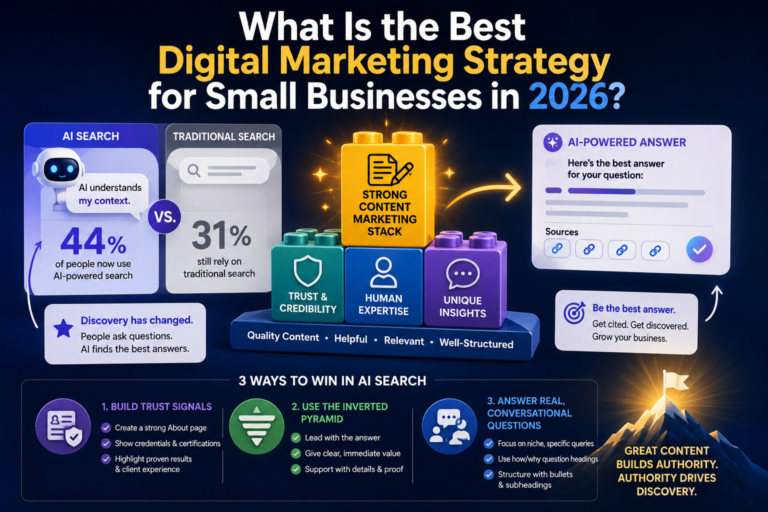
Being cited by AI Search Engines has become more important than simply ranking in the traditional search results because for your potential customers, the context of the answer they are specifically looking for are provided for them, in the format and structure that favors their behaviors.
If you have created content for your small business that understands the needs of your customers, and contextualized your content to match what they may be looking for as you know them, then you can count that at some point, you will be cited as an answer to your customers’ questions.
AI search engines have become the first point of contact between your customers’ questions and the entities that can answer them. Being cited by AI search engines is no longer a bonus, but rather, it has become the primary metric for organic discoverability for businesses that rely on search-driven leads.
What Can Help Businesses be Cited by AI Search Engines?
Content is king. Context is the greater king. The business that provides the best content and establishes the right context to match what their customers are looking for is the one that wins in content marketing. Hence, not all content is treated equally, not by search engines before and absolutely not now as you are trying to get cited by AI search engines.
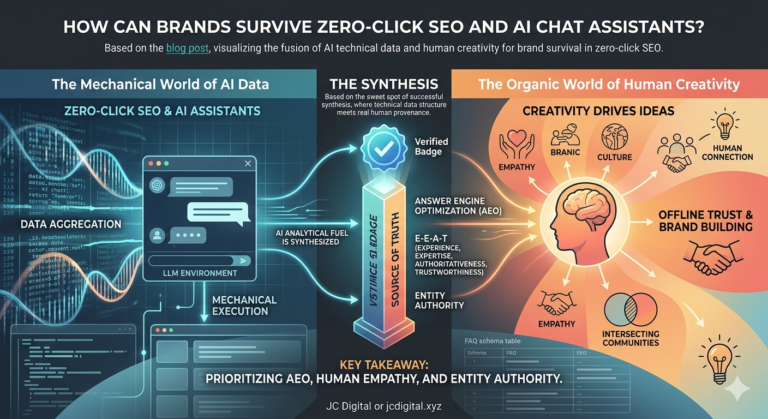
AI systems are build to extract answers that are reliable, structured, and verifiable. As they parse your content, they apply a set of signals to determine the sources that meet that standard before constructing responses.
- Answer-readiness. AI engines favor content that places a direct, clear response to a question within the first few sentences of a section, rather than building toward it through background context. If your page requires the AI to read three paragraphs before finding your actual answer, it is likely to bypass your content in favor of a source that leads with the answer.
- Entity clarity. How consistent and specific are you in introducing who you are and your business across all of your online content? AI search engines use named entity recognition to understand who you are, what you do, and where you operate. Everything about who you are as a business and as an owner needs to be consistent everywhere.
- Schema markup. Structured data encoded in JSON-LD tells AI crawlers exactly how to classify your content, whether you are a service, a blog, a business location, or whether the content you published is an FAQ. Without schema, an AI engine must infer this from context alone, which reduces the precision of how your content gets indexed and cited.
What Philippine-Specific Signals Build AI Trust?
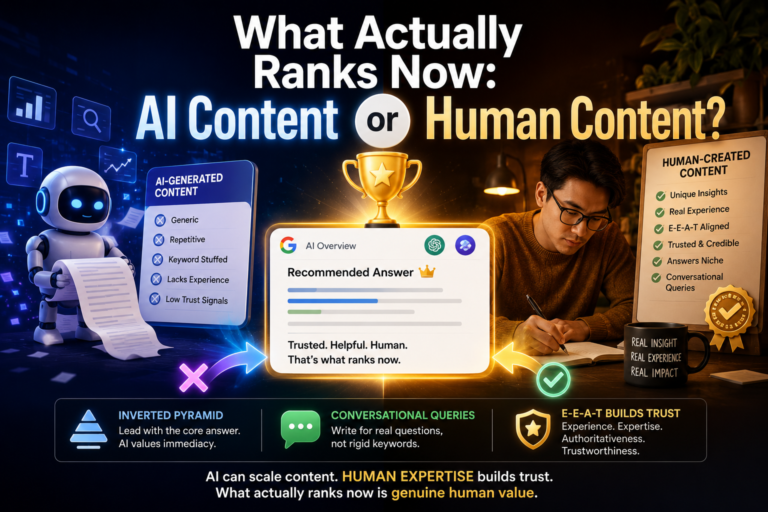
Google’s AI-powered search still trusts unique, human-driven insights, and localized experiences, and doing this in your content actually works in your favor to be cited by AI search engines. That is, of course, if these signals are configured correctly. AI engines handling location-based queries look for geographic and contextual consistency to determine which sources are most relevant to a user in a specific market.
Your Google Business Profile needs to be aligned, first and foremost, with who you are, and consistent with all of your other content about your business. Your profile listing should use identical business name, address, and phone number (NAP) information as your website’s schema markup and any local directory listings.
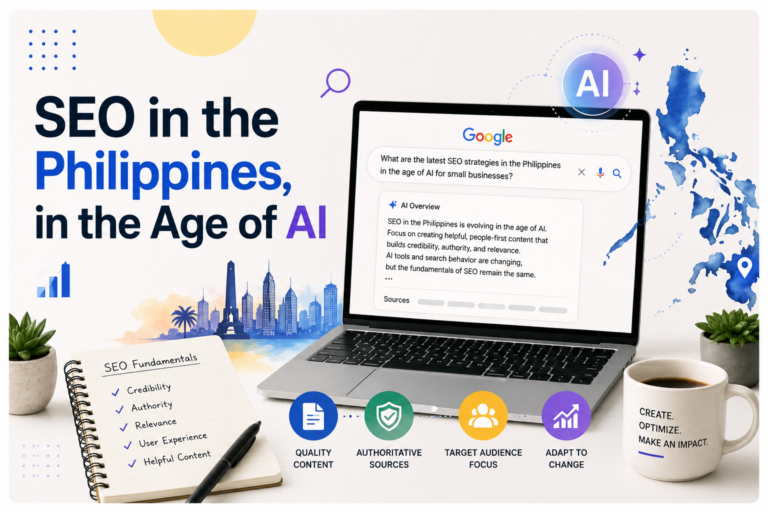
Philippine-context content also matters. Content that speaks specifically to the Filipino business context, such as local regulations, market behaviors, platform preferences, and consumer patterns, are more likely to be cited for localized queries. Writing about digital marketing in general terms is less valuable than writing about digital marketing as it applies to SMEs in Metro Manila.
Authorship signals round out the trust profile. Publishing content under a named author with a clear expertise profile, including a linked author bio, a consistent LinkedIn presence, and attribution across all published posts will strengthen the E-E-A-T signals that AI systems use to evaluate whether a source is credible.
Frequently-Asked Questions
Is SEO still needed if I want to get cited by AI search engines? Yes. Traditional SEO and AI search optimization work together, not against each other. AI engines evaluate the same foundational signals as Google: crawlability, domain authority, content quality, and relevance. Optimizing for AI citations without a working SEO and schema foundation reduces how precisely AI crawlers can classify and surface your content.
How important is a Google Business Profile for AI citations in the Philippines? Very important. Your Google Business Profile is one of the primary entity clarity signals that AI engines use for location-based queries. The business name, address, and phone number on your GBP must be identical to your website’s LocalBusiness schema and any local directory listings. Inconsistency across these sources weakens your entity recognition and reduces the likelihood of being cited for localized Philippine queries.
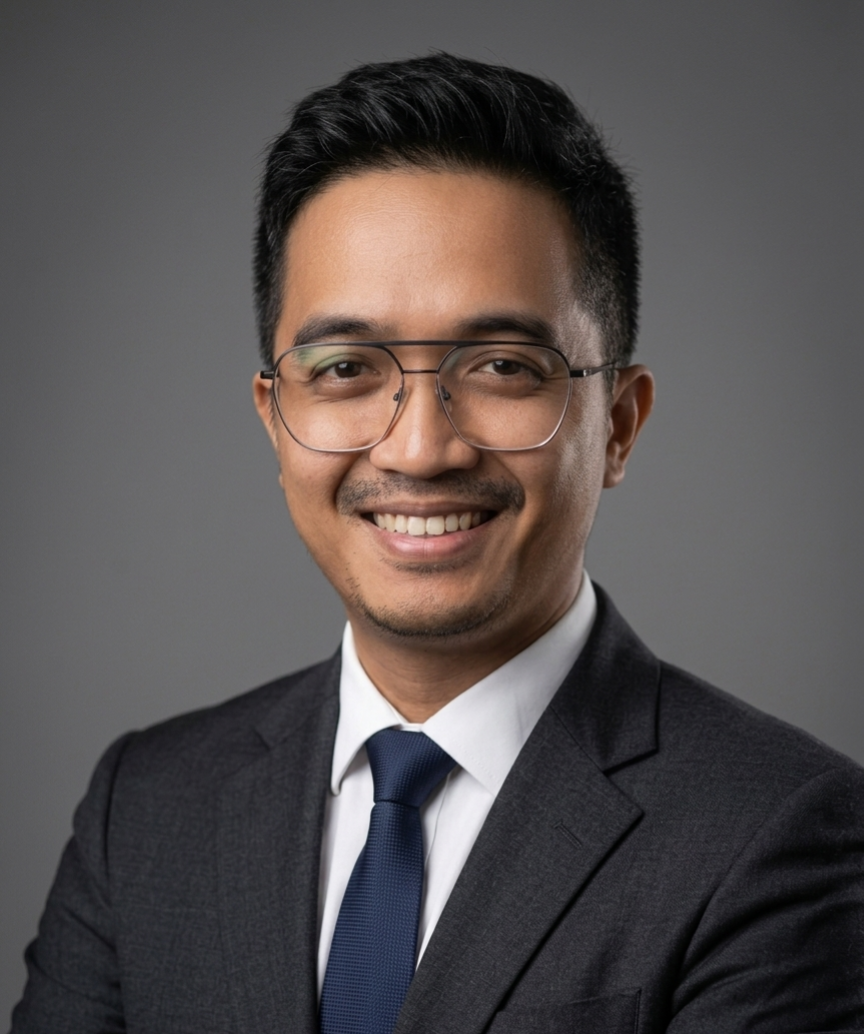
James Michael Chiong is a digital marketing strategist and consultant who helps small and medium businesses in the Philippines grow through SEO, Meta Ads, Google Ads, and data-driven marketing strategy. With 10+ years of experience across agencies, in-house, and consulting roles, James has led digital campaigns for brands in real estate, publishing, education, BPO, retail, and professional services.
He previously served as Digital Director and Director for Digital Strategies at TeamAsia — an award-winning Integrated Marketing Experience agency — where he spearheaded the formation of TeamAsia DigiCreatives, a merged Digital, Creatives, and Technology unit delivering AI-assisted SEO, voice-enabled search, and end-to-end e-commerce marketing solutions.
James has been featured as a social media marketing expert on ABS-CBN News (My Puhunan: Kaya Mo!, March 2025), where he shared practical digital strategies for Filipino MSMEs. He has also been quoted in adobo Magazine in relation to digital transformation in the marketing industry, and has appeared as a guest on TeamAsia’s B2B: Breakfast to Business podcast on Spotify — covering AI in marketing and digital strategy during the pandemic era.
He co-authored multiple thought leadership pieces published on TeamAsia’s platform, including articles on social media authenticity, integrated digital marketing, and the intersection of creativity and technology. He was also recognized as part of TeamAsia’s new management leadership on the agency’s 32nd anniversary in 2024.
James holds certifications in Google Analytics and HubSpot Inbound Marketing, and has served as a Marketing Professor at Lyceum of the Philippines – Cavite. He is based in Bacoor, Cavite, Philippines, and writes about SEO, AI in marketing, and digital strategy on JC Digital.
As Seen In: ABS-CBN News | adobo Magazine | TeamAsia B2B Podcast on AI (Spotify)